Ghana’s Coronavirus cases hit 9

Coronavirus Health Officials NursesGhana has so far recorded 9 confirmed cases

Information minister Kojo Oppong Nkrumah has announced the country has confirmed two more cases of Coronavirus bringing the total number of confirmed cases in the country to nine (9).

“Unfortunately we have confirmed two more cases overnight. Ghana’s case count is now at 9. Health services are still managing all suspected and confirmed cases well,” his tweet a while ago read.

The Ghana Health Service on its website reports that the two new cases were imported.

“On the 18th March, we received another report from NMIMR indicating two (2) more confirmed cases from the Greater Accra Region. Both are imported cases. One is a 56-year-old man, a Ghanaian who travelled back to Accra from a trip to UK about a week ago. The other is a 33-year-old Ghanaian, who returned to Accra from a conference in UAE. Both cases are receiving treatment in isolation.

“This brings to a total of nine (9) confirmed COVID-19 cases. There is no death. On contact tracing, a total of 399 contacts have been identified and are being followed up. Nineteen (19) of the contacts developed some forms of symptoms and samples have taken for laboratory testing. We have received results for 15 of them which are all negative for COVID-19 and we are awaiting results for four (4) of them. Currently, there is no death and all the nine (9) confirmed COVID-19 cases are being managed in isolation and are responding well to treatment.”

At a press conference Wednesday evening, Mr. Oppong Nkrumah said health experts had told government officials that the next two weeks will be critical in Ghana’s fight against the deadly coronavirus pandemic.

He said: “the health experts tell us that the next two weeks are going to be critical in determining whether or not we are going to get significant community spread. They tell us that the general theory pandemic management is that often it is likely the numbers go up a bit before it curves or the situation gets better.

“Therefore, they are bracing for the possibility of some limited recordings of more cases in the medium term but they continue to assure us that the systems they are putting together and continue to ramp-up are such that we will be able to contain it and hold this virus in check.”

Oppong Nkrumah affirmed the government’s commitment in ensuring the safety of every citizen by ensuring that all the measures put in place to stop the spread of the virus are adhered to.

At the briefing, it was revealed that the travel ban imposed on pen’s coming from countries that have recorded more than 200 cases of the disease is in full force.

This ban has led to several persons returned to their places of embarkation upon arrival in Ghana.
Source: www.ghanaweb.com

6 Misconceptions About the 1918 ‘Spanish Flu’


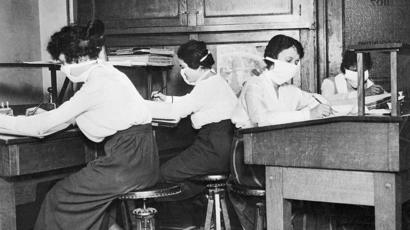
In the pandemic of 1918, between 50 and 100 million people are thought to have died, representing as much as 5% of the world’s population. Half a billion people were infected.

Especially remarkable was the 1918 flu’s predilection for taking the lives of otherwise healthy young adults, as opposed to children and the elderly, who usually suffer most. Some have called it the greatest pandemic in history.

The 1918 flu pandemic has been a regular subject of speculation over the last century. Historians and scientists have advanced numerous hypotheses regarding its origin, spread and consequences. As a result, many harbor misconceptions about it.

By correcting these 6 misconceptions, everyone can better understand what actually happened and help mitigate COVID-19’s toll.

1. The pandemic originated in Spain

No one believes the so-called “Spanish flu” originated in Spain.

The pandemic likely acquired this nickname because of World War I, which was in full swing at the time. The major countries involved in the war were keen to avoid encouraging their enemies, so reports of the extent of the flu were suppressed in Germany, Austria, France, the United Kingdom and the U.S. By contrast, neutral Spain had no need to keep the flu under wraps. That created the false impression that Spain was bearing the brunt of the disease.

In fact, the geographic origin of the flu is debated to this day, though hypotheses have suggested East Asia, Europe and even Kansas.

2. The pandemic was the work of a ‘super-virus’

The 1918 flu spread rapidly, killing 25 million people in just the first six months. This led some to fear the end of mankind, and has long fueled the supposition that the strain of influenza was particularly lethal.

However, more recent study suggests that the virus itself, though more lethal than other strains, was not fundamentally different from those that caused epidemics in other years.

Much of the high death rate can be attributed to crowding in military camps and urban environments, as well as poor nutrition and sanitation, which suffered during wartime. It’s now thought that many of the deaths were due to the development of bacterial pneumonias in lungs weakened by influenza.

3. The first wave of the pandemic was most lethal

Actually, the initial wave of deaths from the pandemic in the first half of 1918 was relatively low.

It was in the second wave, from October through December of that year, that the highest death rates were observed. A third wave in spring of 1919 was more lethal than the first but less so than the second.

Scientists now believe that the marked increase in deaths in the second wave was caused by conditions that favored the spread of a deadlier strain. People with mild cases stayed home, but those with severe cases were often crowded together in hospitals and camps, increasing transmission of a more lethal form of the virus.

4. The virus killed most people who were infected with it

In fact, the vast majority of the people who contracted the 1918 flu survived. National death rates among the infected generally did not exceed 20%.

However, death rates varied among different groups. In the U.S., deaths were particularly high among Native American populations, perhaps due to lower rates of exposure to past strains of influenza. In some cases, entire Native communities were wiped out.

Of course, even a 20% death rate vastly exceeds a typical flu, which kills less than 1% of those infected.

5. Therapies of the day had little impact on the disease

No specific anti-viral therapies were available during the 1918 flu. That’s still largely true today, where most medical care for the flu aims to support patients, rather than cure them.

One hypothesis suggests that many flu deaths could actually be attributed to aspirin poisoning. Medical authorities at the time recommended large doses of aspirin of up to 30 grams per day. Today, about four grams would be considered the maximum safe daily dose. Large doses of aspirin can lead to many of the pandemic’s symptoms, including bleeding.

However, death rates seem to have been equally high in some places in the world where aspirin was not so readily available, so the debate continues.

6. The pandemic dominated the day’s news

Public health officials, law enforcement officers and politicians had reasons to underplay the severity of the 1918 flu, which resulted in less coverage in the press. In addition to the fear that full disclosure might embolden enemies during wartime, they wanted to preserve public order and avoid panic.

However, officials did respond. At the height of the pandemic, quarantines were instituted in many cities. Some were forced to restrict essential services, including police and fire.

Source: http://www.snopes.com

NDC declares a nationwide 3-day fasting and prayer against Coronavirus

Ofosu Ampofo PoliticsSamuel Ofosu Ampofo, NDC National Chairman

In view of the novel COVID-19 pandemic which is rapidly spreading across the world and urgently raising the need for global leaders to take extraordinary measures to contain its drastic threats, the National Democratic Congress (NDC) has called on all its members and supporters, as well as well-meaning Ghanaians (Christians, Muslims and all other Faiths), to seek the face of God Almighty and their forever reliable hope.

According to a statement signed by the National Chairman of the NDC, Samuel Ofosu Ampofo, he said the NDC fully supports the need for every person in Ghana to strictly observe the precautionary measures and directives outlined by the mandated health regulatory bodies and the government in our collective effort to eliminate this debilitating disease which currently has no known cure.

The National Chairman said that though the stringent but necessary measures being implemented not only in Ghana, but by various governments across the world grossly affect our usual ways of life, especially gathering and fellowship in the house of God, it does not and should not affect our relationship with our Maker in any way in seeking His divine intervention in this undesirable situation.

“The holy scripture says in 2 Chronicles 7:14 that, “If my people who are called by my name will humble themselves and pray and seek my face and turn from their wicked ways, I will hear from heaven and will forgive their sins and restore their land”, our faithful God is ever ready to help us in our needs. Deuteronomy 4:7 says, “For what nation has a god as near to them as the Lord our God is near to us whenever we call on him?” Those who know Him will always call on Him, he stated.”

He further stipulated that it is obvious that the world is not in normal times, as this monstrous disease threatens our very existence and so turning to our Maker at this point is therefore non-negotiable.

“The NDC hereby declares a nationwide 3-day fasting and prayer which is to be observed from our various homes starting Friday, 20th to Sunday 22nd March, 2020. We encourage all our party faithfuls and well-meaning Ghanaians to fervently pray for the speedy intervention of the Almighty God in this situation,” Mr. Ampofo added.

“Although the NDC is aware of the consistent and fervent prayers of our Religious bodies and Leaders for the country, we humbly implore the able Leaders of the Christian Faith in Ghana to heed to this all-important call. We also entreat the Office of the National Chief Imam and the Head of the Ahmadiyya Muslim Mission to offer special prayers on Friday for the Nation, by means of their newly adopted ways of worship following the temporary suspension of public gatherings,” Samuel Ofosu Ampofo said.

In God we Trust! In Him lies our strength!! With Him we shall surely prevail soon!!!

Source: www.ghanaweb.com

No university for student with aggregate 09

Graduates 12File photo

Guests at the last Tema West Municipal Assembly Independence Day celebration were awestruck when the emcee announced that one of the recipients of the Chief Executive’s award, Theophilus Okpoti Charway, performed excellently in the 2019 West Africa Senior Secondary School Certificate Examination (WASSCE), but still at home because his parents could not afford to pay his fees at the university.

Master Charway, 18, scored aggregate ‘09’ which included six ‘A’s a B3 and C4.

After he had picked his award and walked happily to his seat, where he and his father sat nearby, Theophilus Okpoti Charway told the Accra File that his dream was to gain admission into the University of Ghana, Legon, where he desired to read a programme in Accounting.

“In fact, the university gave me admission, but my dad could not raise the admission fee, so I’m still at home trusting God for a miracle,” he said with a teardrop on his lower eyelid.

Nicholas Odoi Charway, a private security personnel and father of Theophilus Charway, in fact, shed tears as he told Accra File that he felt he had failed his son.

“I promised to send him to the university should he make the grades. Yes, he made them, but I am unable to perform my part of the bargain. I am helpless any time I see him (son).

“It’s not easy for me at all, though we are still trusting God for a miracle,” the father hoped.

Source: The Chronicle

Beware! Houseflies can transmit coronavirus

File photo

It has been revealed that houseflies can transmit the 2019 novel coronavirus (COVID-19).

The Director-General of the Ghana Health Service (GHS), Dr Patrick Aboagye disclosed that houseflies can transmit the virus, especially in a dirty environment.

“That’s why we say clean surfaces regularly and well . . . ” he answered to a question as to whether houseflies and mosquitoes can transmit the coronavirus.

Source: peacefmonline.com

Coronavirus: New voters’ register will still be done – EC

Jean Mensa S940fEC boss Jean Mensa

Ghana’s Electoral Commission has said it will go ahead with the new voter registration exercises despite the outbreak of COVID-19 in the country.

To prevent the spread of the disease as the country has recorded seven confirmed cases, the government has placed a ban on all social gatherings.

Large gatherings of more than 25 people have been discouraged but the EC says plans are advanced for the successful take-off of the registration process.

The EC in a statement, however, said due to the ban on public gathering, it will announce a new date for the registration in due course

The EC stated that it is taking the necessary steps to guaranty the safety of Ghanaians and safeguard them from COVID-19 during the exercise.

Source: Classfmonline.com

Dogs discover body of woman killed and secretly buried by husband

Body Hidden DogsThe man murdered and buried his wife last Thursday after a misunderstanding between the two

A 55-year-old man Kwesi Jonathan has been arrested by the Greater Accra Regional Police Command for allegedly killing and burying his own wife in their uncompleted building at Domiabra near Kasoa in the Greater Accra Region.

Information gathered indicates that the man murdered and buried his wife last Thursday after a misunderstanding between them.

In an interview with Kasapa FM News Yaw Boagyan, Unit Committee chairman for Gbemomo Electoral area Joseph Akrashie said some residents who had not seen the deceased for some time asked the suspect about the whereabouts of his wife but he told them she had traveled to her hometown not knowing he had killed and buried her secretly.

He disclosed that it took some dogs that were on a prowl to discover the body of the woman much to the utter shock of the residents.

The dogs had reportedly tried to bring out the decomposed body from the whole to eat it.

According to the residents even though they could smell a foul scent they least expected it to be emitting from a decomposed body.

Meanwhile, the Police say the suspect is being interrogated and will be arraigned before court soon.

Source: kasapafmonline.com

Coronavirus: Don’t fear this virus; it’s not the end of the world – Duncan-Williams

Archbishop Duncan Williams MicFounder of the Action Chapel International, Archbishop Nicholas Duncan-Williams

The founder and leader of the Action Chapel International has urged Ghanaians not to live in fear in the wake of the Coronavirus (COVID-19) outbreak.

Archbishop Nicholas Duncan-Williams said it is important to take precaution and trust in God in such times.

In a broadcast, he urged his congregants to keep faith in the Lord, adding that the coronavirus is not the end of the world.

“Don’t have fear of this virus, take all the necessary precautions, but don’t live in fear, don’t be paranoid,” Duncan-Williams said.

“Trust in the Lord like never before, show the enemy that your faith is in God… this is not the end of the world.”

Last Thursday, the Ghana government officially confirmed that the country has recorded its first two cases of the coronavirus.

The coronavirus cases have since increased to six, with over 150 contacts traced by the Ministry of Health.

This has led to some travel restrictions into the country, with President Akufo-Addo also announcing a ban on all social gatherings and sporting activities.

Duncan-Williams also declared 30 days of prayer for the country over the fast-spreading coronavirus.

He said he and other senior pastors of his church will be praying every three hours to “vanquish the powers behind the coronavirus”.

Source: pulse.com.gh

Coronavirus: We can’t reduce number of passengers in trotro – GPRTU

Trotro Transport FaresCommercial vehicle, popularly known as trotro

The Ghana Private Road Transport Union (GPRTU) says it cannot reduce the number of passengers on commercial buses in the wake of the outbreak of the deadly Coronavirus (COVID -19) in Ghana.

A section of the public has appealed to government to take drastic measures at ensuring the reduction in the number of passengers carried by commercial buses across the country in a bid to prevent the spread of the disease.

The call comes after health experts urged all to keep a distance of at least two meters from a person with fever, cough, sneezing, and difficulty breathing.

Many believe that due to how close passengers sit next to each other in public transport there’s the need for the number of passengers to be reduced to ensure the deadly disease is not easily transmitted from one passenger to another.

But speaking to Kwaku Owusu Adjei on Anopa Kasapa on Kasapa 102.5FM, the National Chairman of the GPRTU, Kwame Kumah stated that reducing the number of passengers is impossible.

“We can’t reduce the number of passengers on commercial vehicles simply because of the outbreak of coronavirus. The loading system in our commercial vehicle is a different thing altogether. If a passenger goes to a station and boards a 40 passenger vehicle and says he wants only 5 people on board because he fears he’ll contract coronavirus if the bus is full and he can afford to pay for the empty 35 seats then that’s fine. The driver will set off. If passengers insist they want few people in a 40 passenger vehicle, then the driver will have no option than to share the cost of the remaining seats for them to pay. We are doing business, we just can’t run at a loss.”

Source: kasapafmonline.com

Coronavirus: Ghana confirms 7th case

Coronavirus Health Officials NursesThe new case comes despite measures to curb its spread by banning social gatherings

Ghana has confirmed a new case of the deadly coronavirus disease bringing the total number of cases in the country to seven (7).

The new case comes despite government’s drastic measures to curb its spread by banning social gatherings and imposing a travel ban on countries with high cases of the disease.

Confirming the news, the Ghana Health Service website stated that the new case is another imported one, stating that the patient is a Ghanaian citizen who recently returned from France.

“This afternoon (17 March 2020); we have received report from NMIMR that indicated one (1) more confirmed case as positive for COVID-19 in Greater Accra Region. The case patient is a 35-year-old male, a Ghanaian citizen, who returned to Accra from France within the past 14 days. This is another imported case, which brings the total number of confirmed cases to seven (7). The case is being managed in isolation and he is in stable condition”.

The Ghana Health Service added that they are actively tracing all persons who may have come into contact with the latest patient, as well as the six previous patients.

So far there are no deaths in all the seven confirmed cases, according to the Ghana Health Service.

“With regard to contact tracing, a total of 350 contacts have been identified and are being followed up. Two of the contacts who developed symptoms, had their samples tested but they came out to be negative. Currently, there is no death and all the seven (7) confirmed COVID-19 cases are being managed in isolation and are in stable condition”.

Akufo-Addo shuts down schools until further notice
President Nana Addo Dankwa Akufo Addo has directed the management of schools in the country to shut down effective Monday, March 16, 2020, until further notice.
The President gave the order when he addressed the nation on Sunday, March 15, 2020.

He said, “All universities, Senior High Schools and basic schools ie public and private schools, will be closed Monday, March 16, 2020, till further notice. The Ministry of Education, in collaboration with the Ministry of Communication, has been tasked to roll out distance learning programmes.”

The President added that “BECE and WASSCE candidates will be allowed to attend school to prepare for their examinations but with prescribed social distancing protocols.”

Government bans church activities, funerals, other public gatherings

President Akufo-Addo as part of his address put a ban on all public gatherings including conference, workshops, funerals, festivals, political rallies and church activities and related events as part of measures to stop the spread of coronavirus in the country.

He said the ban will be in force for the next four weeks.

“I have decided in the interest of public safety and the protection of our population to review the public gathering advisories earlier announced as follows. Firstly, all public gatherings including conferences, workshops, funerals, festivals, political rallies, sporting events and religious activities, such as services in churches and mosques, have been suspended for the next four (4) weeks. Private burials are permitted, but with limited numbers, not exceeding twenty-five (25) in attendance,” the President said.

Soure:www.ghanaweb.com

Design a site like this with WordPress.com
Get started