SHS to be reduced to 2 years while JHS increased to 4 years-NaCCA Hints

wesley girls

The National Council for Curriculum Assessment (NaCCA) has hinted some critical features in the new Educational Reform to be implemented soon in Ghana’s Educational System.

When the new curriculum is implemented, learners/pupils in Junior High Schools will have to attend school for four years, thus: JHS 1 to JHS 4.

Also, High Schools will now be for two years instead of the current three years and students will be issued with a High School Diploma.

“The High School Diploma Programme will start from Basic 11 to Basic 12. This means that, one qualifies for High Diploma Programme Certificate after completing Basic 12.”

READ STATEMENT BELOW

The National Council for Curriculum Assessment (NaCCA) has hinted some critical features in the the new Educational Reform to be implemented soon in Ghana Educational System. These reforms
are structured under what was termed “Kindergarten (KG) to SHS.

New Curriculum” of Key Programmes. In the first four years of high school education, learners are
expected to take a Common Core Programme (CCP) that emphasizes a set of high, internationally-benchmarked career and tertiary education ready standards. Learners need to acquire these
for post-secondary education, the workplace or both. The standards articulate what learners are expected to know, understand and be able to do by focusing on their social, emotional, cognitive and physical development. The (CCP) runs from Basic 7 through Basic 10.

The common core attributes of the learner, which describe the essential outcomes in the three domains of learning (i.e. cognitive, psychomotor and affective), are at the centre of the CCP (see Figure 1). Inspired by the values which are important to the Ghanaian society, the CCP provides an education of the heart, mind and hands in relation to on the learnerʼs lifetime values, well-being, physical development, metacognition and problem-solving. Ultimately, this will produce character-minded learners who can play active roles in dealing with the increasing challenges facing Ghana and the global society.

NaCCA has outlined some new areas in the educational system.
These Key Programmes include;

  1. Primary Years Programme (PYP). This comprises of Kindergarten
    (KG) to Primary six (6).
  2. Common Core Programme (CCP). This starts from Basic 7 to Basic 10. The current system has Basic 7 to Basic 9. This means that, when the new curriculum is implemented, learners/pupils in Junior High Schools will have to attend school for four years, thus:
    JHS 1 to JHS 4.
  3. High School Diploma Programme (HDP). The High School Diploma Programme will start from Basic 11 to Basic 12. This means that, one qualifies for High Diploma Programme Certificate after completing Basic 12.
  4. Career-Related Programme (CRP). The Career-Related Programme also starts from Basic 11 to Basic 12. Note: In the new curriculum to be implemented, “Basic” as currently
    used will be changed to “Grade”. Example; Grade 1, Grade 2, Grade
    6 instead of Basic 1, Basic 2, Basic 3 etc. The new curriculum will also have an assessment called “National Gateway Test” for every two years of learning starting from Grade 1 to Grade 12. Senior High School students will now undergo an External
    Assessment which would be done at Grade 12. After this programme, students are likely to receive Diploma Certificate as the certification of the KG to SHS course. The current class 6 pupils are going to be pioneers for this change.

Source: MyNewsGh.com/ Ayeh Offei-Akoto/2020

Rawlings hits back at Kwesi Adu, challenges him to ‘open his mind and eyes’

Jerry John Rawlings

The founder of the National Democratic Congress (NDC), Flt. Lt. Jerry John Rawlings, has taken a swipe at one Mr. Kwesi Adu, asking him to open his “mind and eyes to some political machinations and vicious politics” in Ghana.
Mr. Kwesi Adu had earlier written that “Flt. Lt. Rawlings has always laid claim to every word from him as the truth, so much so that, he is known to challenge the public and anyone, who contradicts his version of events, to be prepared to be subjected to (what he calls) ‘chemical interrogation’before a village shrine or to a lie detector. And because no one has so far taken up his offer to such a “chemical interrogation” he has grown to believe that he is the ultimate repository of truth in this country”.

Mr. Kwesi Adu had earlier written that “Flt. Lt. Rawlings has always laid claim to every word from him as the truth, so much so that, he is known to challenge the public and anyone, who contradicts his version of events, to be prepared to be subjected to (what he calls) ‘chemical interrogation’before a village shrine or to a lie detector. And because no one has so far taken up his offer to such a “chemical interrogation” he has grown to believe that he is the ultimate repository of truth in this country”.

He also stated that Flt. Lt. Rawlings accused him [Kwesi Adu], in a radio interview on July 5, of writing a ‘vicious story’ about him; a claim Mr. Adu said is untrue and further challenged Flt. Lt. Rawlings to bring evidence of the ‘vicious story’

However, former President Rawlings replied that even though Mr. Adu has been very selective about certain events and tried to create a mean picture of him [Rawlings], he still believes that Mr. Adu is not a mean-spirited person.

Mr. Rawlings asked him to re-collect and put himself together to join up the complex struggle with and on behalf of the good people of Ghana.

“In spite of some of your misperceptions about me, I still believe that you are still one of the few who should rejoin the forces of right and conviction to carry on the struggle”, he added.

According to Flt. Lt. Jerry John Rawlings, “personalities like Agyekum of the Eastern Region, Dr. Tony Aidoo, Goosie Tanoh, Dr. Amanor-Wilks and several others are still very much on the ground with their integrity intact. We do not hold hands, we have our little differences but I know and believe that we are moving in the same direction”.

“In addition to any suggestions from you [Mr. Adu] and any from other vile minds that you and I should know, I would want to suggest a few painful events like the killing of the Yaa Naa and his 39 elders, the masterminds behind the killing of the 34 women in my last term in office, and the several other malicious plots and lies that have been cooked up and persistently served to the people since the inception of the 79 revolt, and especially because of my refusal to let go of my integrity”, Mr. Rawlings’ statement read.

He further said he would love to shock Ghanaians and the world with the exposure of the odious characters who seem to have gotten away with atrocities they committed because of the weakness of the Ghanaian justice system.

He concluded that justice was delivered after the judges were murdered, however, the Yaa Naa and the 39 souls are yet to see one act of justice.

Source: angelonline.com.gh

GES confirms death of another final year SHS student

The student died of malaria

The Ghana Education Service (GES) has confirmed the death of a final year Senior High School (SHS) student at Methodist Girls High School located at Mamfe in the Eastern region.

The final year SHS student died just a few weeks after resumption of academic work to prepare for the final exams.

A statement from the Ghana Education Service indicated that the female student of Methodist Girls High School located at Mamfe in the Eastern region died from Acute Malaria.

The statement said the student whose name was given as Cindy Aku Sika Addo was rushed to the Tetteh Quarshie hospital on Thursday, July 16 but was transferred to Koforidua Regional Hospital on Friday where she met her untimely death.

The Ghana Education Service has assured the family of its support in giving her a befitting burial.

This increases the number of deaths to three in just a space of two weeks.

Read statement below

Source: My News GH

What you need to know about the Frafra people of Ghana, West Africa

Frafra People GhanaThe Frafra people are believed to have come from the Gur-language family of the Oti-Volta River.

The Frafra (also known as Gorse) are hardworking agricultural Gur-speaking people ethnic group in Northern Ghana and Southern Burkina Faso. The Frafra people who live predominantly in the north-eastern part of the Upper East Region of Ghana called themselves in Gurune language as “Gorse,’ whilst some historians refer to them as “Gurune.” However, when a Frafra meets any Gurune speaking person he refers to him or her as “Mabia” (My family).

Their popular name Frafra is a colonialist term given to them by the Christian Missionaries, who when they first encountered Frafra farmers were greeted with the common greeting to people working “Ya Fare fare?”, which means “How is your suffering (work)?” The missionaries began referring to these Gurune people as Frafra, a derivation of the greeting, which eventually was adopted by the people themselves and has been popularized by the Southern Ghanaian peoples.

The Frafra people are also well known for their artistic craft products: straw articles like hats and baskets as well as feather products. Their products can be found all over Ghana in the major towns that tourists visit. Since the colonial era Frafra youth have been compelled to emigrate to the southern parts in search of menial jobs.

Bolgatanga is the commercial centre of the Frafra people. Other important villages and towns include Bongo, Tongo, Zuarungu, Zoko, Zuarengu, Somburungu, and Pwalugu. It must be noted however that Tongo is the principal town of the Talensi people who are ethnically different from the Frafra. Today, the Frafra can be found in many major towns and villages all around Ghana including Accra, Kumasi, Tamale, Sunyani and Cape Coast.

They are also highly mobile, often travelling south to look for work during the dry season. There are also some Gurune-speaking people (the Nankani) in Navrongo District, which is generally a Kasem-speaking area. Native Gurune is also found in Burkina Faso, in the Nahouri province, Eastern part of Tiébélé and the region of Pô.

The Frafra people are believed to have come from the Gur-language family of the Oti-Volta River. They occupy the Bolgatanga, Bongo and Tellensi-Nabdan districts of the Upper East Region of Ghana. They share borders with southern Burkina Faso and are believed to have migrated from there to their present location. Their language is very close to Moshie, which is the language of one of the major ethnic groups in Burkina Faso.

The historical origin of Frafra people is very scanty and much research need to be done on them. However, there are certain pointers to their historical migration. According to a legend narrated by Anthony Atarebore, the Frafra and the Dagaaba were both linked with the Dagomba and share a common origin. This Dagomba connection re-echoes Hébert’s legend about the first Dagara, an orphan who was accused of witchcraft and expelled by the Dagomba chief. The orphan accordingly fled towards the Black Volta and stayed near Babile, across the river. However, both legends do not account for the relationship with other ethnic groups, which are shown to belong to a common Mabia ancestry (Bodomo 1994).

According to Atarebore’s legend, “a long time ago, Dagomba, Gurune and Dagao were brothers, or rather cousins. They lived somewhere in Southern Africa among the Bantus. From Southern Africa, they began to migrate northwards through Zimbabwe, Uganda, Rwanda and Kenya. Then, turning westward, they moved to Sierra Leone, Northern Nigeria, and finally to Ghana. Historians differ in their opinion as regards the nature and scale of these movements. For instance, Lentz (1994) rejects the hypothesis put forward by Eyre-Smith’s8 that the history of northern Ghana, indeed of the whole West African savannah, seemed to consist of ‘constant’ movements of people as a result of slave-raiding, internecine warfare, etc., whole sections of a tribe or family breaking away and migrating to a new territory.

Instead, Carola Lentz suggests that migration took place in small-scale distances and small groups.

It is not very clear whether the Frafra existed during the old Ghana Empire in the Middle Ages and formed part of that empire since its present location is not so far from the location of the former empire. The facts, however, cannot be verified. According to some elders, the people of Zuarungu, one of the major settlements of the Frafra, migrated from Wuarungu in Burkina Faso. It is believed that the name Zuarungu is derived from Wuarungu. Even today, there is still a link between the people of Zuarungu and the people of Wuarungu.

For some Frafra chiefs, their tradition traces their historical and cultural ties to the Mamprusi kingdom. This is the case of Namos of Tongo whose oral traditions recount how their apical ancestor- Mosore- had come to Tongo on exile from Nalerigu and had remained in Tongo. Similar traditions seem to exist in other Frafra enclaves. Bongo district is made up of two main communities. The original settlers are Gurune-speaking and the second group is the Mamprusi stock that settled mainly in the central part of the present. Some Frafra Nangodi people also share similar Mamprusi ancestry.

Frafra people speak Frafra or Farefare, also known as Guren?, language. The Frafra language belongs to Gurma Oti-Volta cluster of languages of the larger Niger-Congo language family.

Source: ghanaianmuseum.com

How the Fantes of Ghana were led to their present home by animals disguised as men

Mankessim OsonThree mysterious warrior-priests, namely Oburumankoma, Odapagyan and Oson

The place of mythology in the historiography of a people is debated but not discarded even by hardcore scientific historians. The point here is that beneath the embellishment, origin stories and other cultural explanatory theories hold truths necessary to a good reconstruction of what may have happened thousands of years ago.

In the case of the Fantes of Ghana, how they came to live where they presently are, is a fascinating story with all the makings of a good Hollywood epic.

The Fantes are the coast-dwelling people who live between the western border of Ghana’s capital city Accra and Cape Three Points, the southernmost point of the country located in the Western Region.

The Fantes are a part of the Akan people, the largest ethnic group in Ghana who make up more than 50% of the country’s population. The Akan comprise more than 20 sub-groups among which are the Asante, undoubtedly the most-known people in Ghana to people outside.

Mankessim, which translates into “in the big town”, is the traditional headquarter-town of the Fantes. It was the first major town they founded but until the 13th century, that land did not belong to the Fante.

Oral historians in the courthouses of Fante chieftains recount that their forefathers tore away from the Bono people, another Akan group in Ghana’s hinterlands, in about the 1200s. Indeed, Fante means “half/part torn” and further credence is lent to the tearing away from the Bono by the fact that there is a very close proximity in the language of the Bono and that of the Fante.

Descending southwards, the Fantes were split into three groups and led by three mysterious warrior-priests, namely Oburumankoma, Odapagyan and Oson. The latter warrior-priest conquered the autochthonous Etsii people and founded Mankessim.

Casely B. Essamuah summarizes the leadership of the trio:

“These were all under the leadership of three legendary leaders: Oburumankoma (whale), Odapagyan (eagle), and Oson (elephant)—patriarchs and priests who, in addition to their magical regalia, also possessed mfoa (short swords) signifying their judicial authority. They also represented the three-tiered system of the natural order and the mastery that each animal is said to have had over its sphere.”

Although, the Fantes believe these three men were literal beings with magical powers, there is a school of thought that argues that the trio are personified conceptions of beliefs. The fact that they are not known by any names but names of animals thought to dominate spheres of the natural environment boosts this school of thought.

For proponents of this argument, including F.L. Bartels writer of The Roots of Ghana Methodism, Oburumankoma, Odapagyan and Oson are supposed to be metaphors of Fante self-perception and a privileged retelling of the story of their founding in their present home.

Oburumankoma the whale is supposed to portray how the Fante were brave fisher-folks; Odapagyan the eagle speaks of Fante aerial ability and Oson the elephant symbolizes Fante land dominance.

Further support for this school of thought comes from geo-historical analyses. The hinterlands from where the Fante tore away from the Bono, has no sea hence the reality of Oburumankoma the whale, at least at that time, would seem implausible.

In spite of this, the people believe that their three warrior-priests continue to watch over them from the spirit world.

Essamuah adds:

“The place of interment of these three leaders, in the thicket of trees some ten miles from the city of Mankessim, became in time the “habitat of ghosts [asamanpow] or of spiritual powers inhering in nature [abosompow]”…In addition to serving as the spiritual watchdog over the interests of the Fante community, the Nananom Mpow became the mnemonic of the ancient Fante’s historical identity. It was here in the grove that histories of the people and especially of royal families were recounted.”

Source: face2faceafrica.com

Justice Annie Jiagge: The first Ghanaian woman to become a lawyer by defying patriarchy

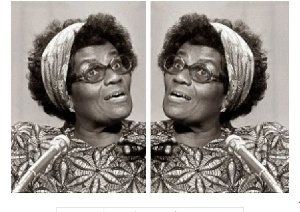
Justice Annie Jiagge

Ghana’s first female lawyer and Judge, Justice Annie Jiagge’s story will inspire you not to heed to the naysayers and saboteurs in your life.

The daughter of a schoolteacher, Henrietta Baëta and Presbyterian minister Robert Domingo Baëta, Annie was born 7th October 1918 in Lomé, the present capital of the Republic of Togo.

Her parents had 8 children with her elder brother Christian rising to become an academic and Presbyterian minister who was elected the Synod Clerk of the Evangelical Presbyterian Church of the Gold Coast from 1945 to 1949.

She earned her teacher’s certificate from Achimota College in 1937. From 1940 to 1946, she was headmistress and schoolteacher at the Evangelical Presbyterian Girls School.

Her journey to becoming an astute legal luminary and jurist begun in 1946 when she gained admission to study at the London School of Economics and Political Science.

Annie who had been trained to value her intelligence and eschew chauvinistic narratives by her parents was confronted by her male colleagues from the then Gold Coast to drop her academic pursuits. They felt the law was too much for a woman like Annie. One of her colleagues even went as far as proffering unsolicited advice by asking her to study dressmaking at the Paris Academy.

Rather than pay heed to their callous remarks she assured them that she would return to the Gold Coast if she failed her first examination.

Unfortunately for them, She passed and they had no choice but to stop bothering her.

She went on to receive her LLB in 1949 and was subsequently called to the Bar at Lincoln’s Inn.

Baeta established a private practice upon her return to the Gold Coast in 1950. She gave up the Bar and became a magistrate for the Bench in June 1953.

Her selection as High Courts Judge also made her the first woman High Court judge in the (British) Commonwealth.

According to the SOP Library, she rose quickly through the ranks to become a judge of the Court of Appeal in 1969, the highest court in Ghana at the time. She was asked to chair the Commission to investigate the Assets of Senior Public Servants and Named Political Leaders in 1966 following the overthrow of Kwame Nkrumah.

Annie was the first female judge of the Court of Appeal. She later became president of the Court of Appeal in 1980 until her retirement in 1983.

She also served on the Committee of Experts who drafted Ghana’s 3rd and 4th Republican Constitutions.

From 1993 until her death, Annie Jiagge served on Ghana’s Council of State. She died on 12 June 1996 in Accra.

Aside legal matters she also held positions including the president of the YWCA and regularly attended conferences of the World Council of Churches.

In her honour, the Justice Annie Jiagge Memorial Lectures was established by the Ministry of Gender in 2009 for a role in shaping the legal profession. A boarding house, the Annie Baëta Jiagge House, formerly, House 17, at her alma mater, Achimota School was also named in her memory.

Source: braperucci.africa

Two SHS final year students give birth, others pregnant

Villager PregnantThe students have expressed their desire to write the exams despite their situation

Two final year students of St. Fidelis Senior High Technical School in the Kwahu Afram Plains South District of the Eastern region who recently delivered and a seven month old pregnant student are struggling to cope with the compulsory boarding directive.

President Akufo-Addo directed that all final year Senior High School (SHS 3) students, together with SHS 2 Gold Track students who resumed academic exercise on 22nd June, 2020 to complete the academic calendar must be in the boarding house as a measure to control the spread of Coronavirus in schools.

However, due to the awkward situations the two final year students find themselves, they have not been able to resume academic work despite being willing to write the West Africa Senior High Certificate Examination (WASCE) starting this month.

But one of the lactating students on Tuesday wrote to the Headmaster of the School and copied the District Director of Education Service about her condition asking for permission to come to school from home to enable her take care of her child and at the same time partake in learning to prepare for the exams.

A family member of the student, told Starr News “she was a boarding student but got pregnant and delivered just before government reopened schools so it means we had to take her from the boarding to stay in the house. But because of the directive that all the students should stay in school she was not able to go because of the child. So we wrote a letter to the headmaster begging him to let her go to school from the house. So she has been going to the school just that she feels tired and always be sleeping in class because the baby doesn’t allow her to have enough sleep.”

Starr News has gathered that the lactating student has been betrothed to the man who impregnated her at Tease Community where she is cohabitating.

One other lactating student and a heavily pregnant student are, however, yet to report to school due to the unfavourable boarding directive.

Teenage pregnancy is prevalent in the Afram Plains area due to poverty and other socio-economic factors.

Many victims of teenage pregnancy are forced into marriages with the perpetrators by their parents.

The Chief Executive Officer of International Child Development Program (ICDP) Joyce Lanyo, says it is important for stakeholders in the District to ensure that the students are supported to write the exams and prevent being forced into marriage with the perpetrators.

ICDP which is implementing Partner for Girls Advocacy Alliance a project initiative of Plan International Ghana seeking to eradicate Child marriage and gender based violence said, many teenage girls are being forced into marriage at the expense of their education during such situations.

Source: Starr FM

Voters registration: Man in his 70s collapses in queue

File photo of people in a queue to register

A septuagenarian, Mr Phanuel Ameko, was saved by a health agent at the Adaklu Kodzobi Local Authority School registration centre when he collapsed in the queue and had to be revived.

Mr Mavis Amedzoku, a health agent at the centre, who briefed the Ghana News Agency, said the man in his 70s fell while in the queue for the aged and was resuscitated.

She said Mr Ameko was giving first aid and tested for malaria.

Mr Ameko was attended to by the registration officials after he regained consciousness.

Mr Prosper Kumah, a party agent, complained about the large number of inhabitants in the many communities under the Centre.

“I doubt if everybody can be registered within the six days because the queue is getting longer each day,” he said.

Some of the satellite communities include Kodzobi Ando, Areas 52 and 53, University of Health and Allied Sciences.

The GNA observed that there was order at the centre as seats were provided for all amidst strict social distancing.

Source: GNA

Suspected water barrel thief tied to a tree and flogged; 2 arrested

Boy Flogged.jpegNsoh Adongo tied to the tree

The Police in the Upper East Region have rescued a 27-year-old man from a mob action for allegedly stealing a storage barrel and some stainless steel bowls.

The man identified as Nsoh Adongo according to the police who confirmed the incident to MyNewsGh.com, was saved from a mob attack at the Dorongo Primary School after a distress call was placed to the Police in the Upper East regional capital, Bolgatanga.

According to them, the 27 years old was tied to a tree with a rag with multiple marks of assault on him at the premises of Dorongo Primary School, with a large crowd at the scene including the assemblyman of the electoral area.

The victim was rescued and was rushed to the Police Clinic, Bolga where he was treated and discharged on medication.

Preliminary investigations by the Police indicate that the Assemblyman of the area Martin Adongo and two others namely; Atanga Atampugre and Abu Akanyela who were part of the mob have been arrested.

Source: My News GH

Birth certificate is no proof of Ghanaian citizenship – Supreme Court

Birth Certificate VoltaAccording to the supreme court, birth certificate has no bearing of citizenship to the holder

The Supreme Court in its judgement in the case between the National Democratic Congress (NDC) and the Electoral Commission (EC) has indicated that acquiring a birth certificate does not prove citizenship.

The apex court in a unanimous decision contends that holding a birth certificate has no bearing of citizenship to the holder.

The court explains that the document does not establish “the identity of the bearer”.

This is contained in the court’s judgment in the case filed by private citizen Mark Takyi Banson which court delivered judgment on June 25 together with the case filed by the opposition NDC.

While the NDC case wanted the current voters ID card to be used in the registration exercise, Mr. Banson made a case for the inclusion of birth certificate insisting it proves identity of prospective voters as Ghanaians who have turned 18.

The decision written by Justice Ashie Kotey states that a birth certificate does not link its holder to the information it contains. It adds that it provides no evidence of citizenship.

The court compares it to another document it has already rejected; the National Health Insurance Cards and concludes it’s actually better than the Birth Certificate.

It is worthwhile to note that the birth certificate is used as a source document for various registrations including passports which are currently being used in voter registration.

Source: pulse.com.gh

Design a site like this with WordPress.com
Get started